
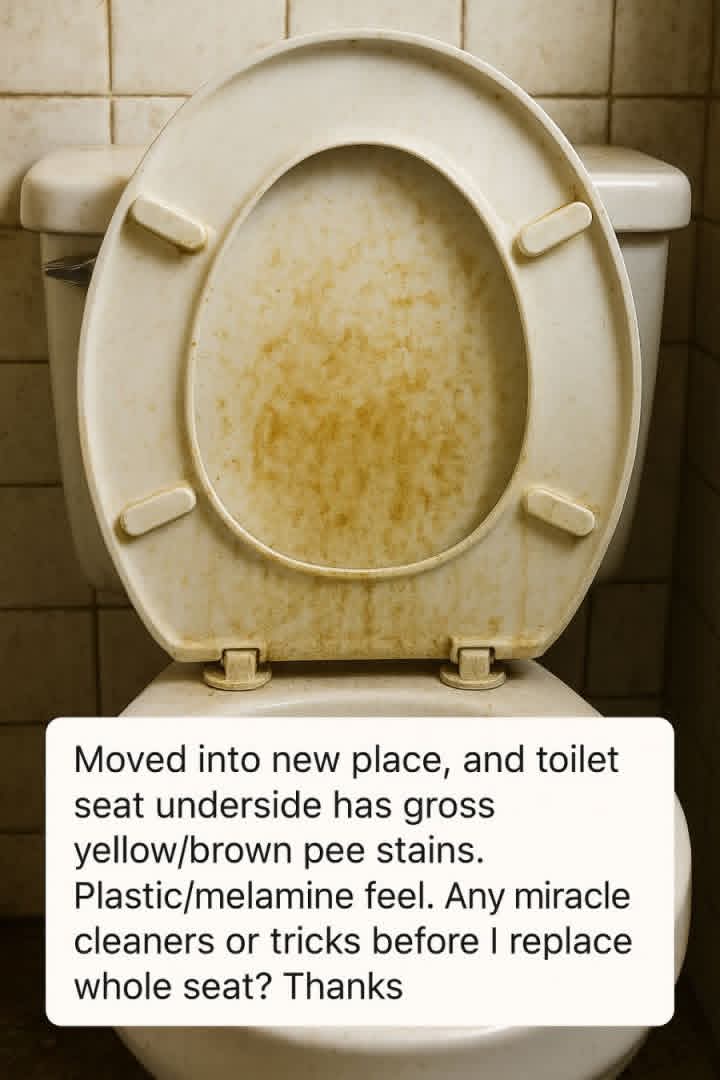
Moving into a new place is exciting—until you discover something truly unglamorous, like yellow-brown stains on the underside of the toilet seat. If the seat feels plastic or melamine and the stains look like old urine that’s been there a long time, you’re not alone—and you’re not necessarily doomed to replace it immediately.
Before you toss the whole seat, here’s what you can realistically try, what works, what doesn’t, and when it’s time to walk away.
First, the Honest Truth About Those Stains
On plastic or melamine toilet seats, yellow or brown “pee stains” usually fall into one of two categories:
Surface buildup – dried urine, minerals, bacteria, or cleaning product residue
Permanent discoloration – staining that has chemically bonded with or degraded the plastic
Miracle cleaners can help with #1. Nothing truly fixes #2.
Try These Cleaning Methods (In This Order)
1. Baking Soda + Hydrogen Peroxide Paste
This is the best “hail Mary” option.
Mix baking soda with 3% hydrogen peroxide into a thick paste
Spread it generously on the stained areas
Let it sit for 30–60 minutes
Scrub with a non-scratch sponge or old toothbrush
Rinse and dry
✔ Works well for organic stains
✖ Won’t reverse deep plastic discoloration
2. White Vinegar Soak (Mineral-Focused)
If the stains look crusty or streaky rather than uniform:
Spray or soak paper towels with white vinegar
Press them onto the underside of the seat
Leave for 20–30 minutes
Scrub gently and rinse
✔ Good for urine + hard water combo
✖ Limited on old yellowing
3. Magic Eraser (Use Carefully):
Try These Cleaning Methods (In This Order)
1. Baking Soda + Hydrogen Peroxide Paste
This is the best “hail Mary” option.
Mix baking soda with 3% hydrogen peroxide into a thick paste
Spread it generously on the stained areas
Let it sit for 30–60 minutes
Scrub with a non-scratch sponge or old toothbrush
Rinse and dry
✔ Works well for organic stains
✖ Won’t reverse deep plastic discoloration
2. White Vinegar Soak (Mineral-Focused)
If the stains look crusty or streaky rather than uniform:
Spray or soak paper towels with white vinegar
Press them onto the underside of the seat
Leave for 20–30 minutes
Scrub gently and rinse
✔ Good for urine + hard water combo
✖ Limited on old yellowing
3. Magic Eraser (Use Carefully)
Melamine foam can physically abrade stains away.
Lightly dampen the eraser
Gently rub the stained area
Stop if the surface becomes dull
✔ Can visibly lighten stains
✖ Can damage the finish if overused
4. Oxygen Cleaner (Oxi-Type Products)
Dissolve in warm water
Apply with cloth or sponge
Let sit 15–20 minutes before scrubbing
✔ Safer than bleach
✖ Slower and less dramatic results
What Not to Do
Straight bleach – may lighten stains temporarily but often turns plastic permanently yellow
Abrasive powders or steel wool – scratches trap future grime
Ammonia + bleach (ever) – dangerous fumes
The Reality Check: Is It Worth It?
If:
The stains remain after peroxide or Magic Eraser
The plastic looks evenly yellowed rather than blotchy
There’s an odor that won’t disappear
Then the seat is permanently stained, not dirty.
And here’s the good news…
Replacement Is Often the Best (and Cheapest) Solution
A brand-new toilet seat:
Costs $15–$30
Takes 5–10 minutes to install
Eliminates hygiene doubts completely
For something you use daily, replacement is often more satisfying than endless scrubbing.
Bottom Line
Yes, there are cleaning tricks worth trying—especially peroxide, vinegar, and gentle abrasion. But if the stains are baked into the plastic, no miracle cleaner will truly restore it. In that case, replacing the seat isn’t giving up—it’s upgrading your peace of mind.
Sometimes the cleanest solution is a new start. 🚽✨